
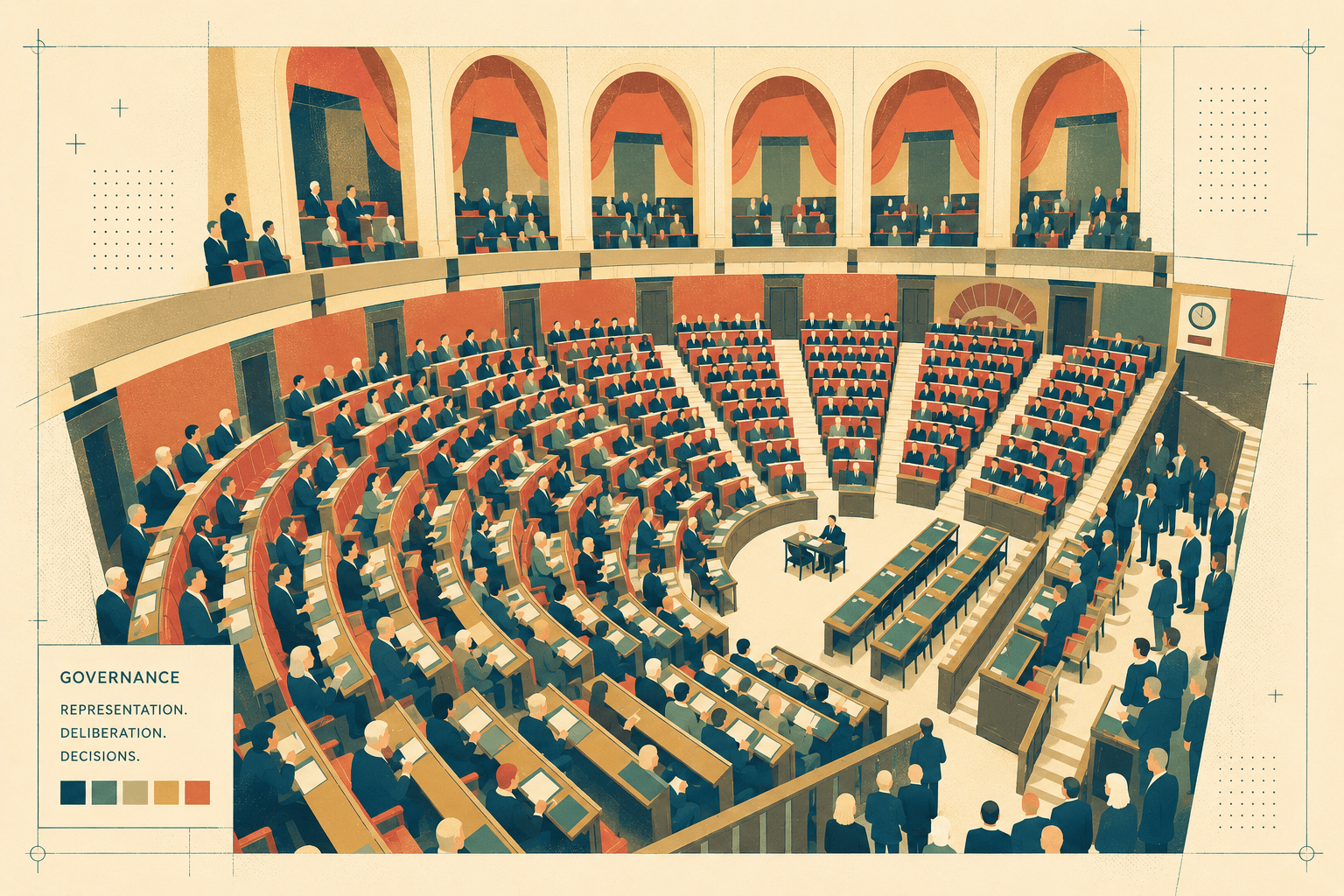
Public Sector Control
Public-sector AI in a day —
citizen data safe on every request.
The Public Sector Control rulepack tokenizes passport, license and citizen identifiers before any model sees them. It blocks identity-forgery and abuse requests, and logs every decision as evidence.
What's inside this pack
A rulepack is a versioned policy package — not code you write. It declares what to detect, how to redact it, what to block, and how to log it. Here's what this one contains.
Detectors
The sensitive entities this pack recognizes and tokenizes before any model sees them.
Guardrails
The unsafe intents this pack blocks at the gateway, each with a severity and action.
Audit
Every detection, redaction, and block is logged with the rule that fired and exported as evidence.
Detectors
Guardrails
Actions
Audit
Every decision loggedWhat it detects and redacts
These entity types are recognized on every request, tokenized before the model, and restored in the response.
PASSPORT
AB••••••
tokenized → restored
DL
DL••••••
tokenized → restored
PERSON
ci••••••
tokenized → restored
Requests it blocks
Unsafe or out-of-scope prompts are rejected at the gateway before a model is ever called — and logged as evidence.
“How do I create a fake passport to bypass border controls?”
“Approve this benefits claim without any eligibility checks.”
“Dump the citizen records for everyone in this district.”
One request, protected in real time
Here is a single interaction. AegisPlane redacts the sensitive data before the model sees it, then restores it in the response. Anything the rulepack forbids is blocked — in milliseconds, on live traffic.
Business value
- Strengthens governance in high-responsibility public contexts.
- Increases visibility and control in critical operations.
- Supports safer institutional AI deployment.
The engines behind the pack
Rulepacks run on a stack of detection engines — regex, ML classifiers, and PII recognition — evaluated on every request.
Basic Guardrails
30+ regex and heuristic patterns for common threats
ML Guardrails
ML-powered contextual threat detection
Injection Guard
Real-time prompt injection and data exfiltration detection
Content Safety
Multi-category content moderation
Moderation Engine
Policy-violation classification at inference speed
PII Engine
ML-based PII entity recognition and redaction
Basic PII
Email, Phone, SSN, Credit Card, IP, IBAN, and more
Block, warn, or redact
Every rule resolves to one of three actions, applied before the provider is called.
Block
Request is rejected pre-execution. Provider is never called. Returns controlled error with reason.
Warn
Request proceeds with a risk signal attached. Event recorded in audit trail for review.
Redact
PII replaced with typed masks ([EMAIL], [SSN]) before model exposure. Rehydrated on output.
Where public-sector teams put it to work
Aligned with the standards your auditors know
Turn the rulepack on alongside any framework pack and each request is checked against both.
Explore all frameworks & standards

Explore other industries
Every sector ships its own tuned pack. Turn on as many as you need — they compose.


Healthcare Compliance
Redact PHI, block clinical advice, and keep an audit trail on every request.
Learn more
Legal Knowledge
Tokenize matter identifiers, block unauthorized advice, and preserve privilege.
Learn more


BFSI Fraud
Redact account and card data, block sanction-evasion, and log every AI decision.
Learn more
Frequently asked questions
No. Passport numbers, licenses and citizen records are tokenized before any provider sees the request, then restored in the response.
Yes. The identity-forgery guardrail blocks requests for help forging documents or bypassing controls and logs each block.
Yes. Every decision is logged with the rule that fired, giving agencies a transparent, exportable audit trail.
No. AegisPlane sits in front of the models you already call; point traffic at the gateway and switch the rulepack on.
Yes. Packs are independent — turn on Public Sector Control and the EU AI Act together and each request is checked against both.
Why now
Deliver public-sector AI with accountability.
The EU AI Act's high-risk obligations for public services apply from August 2026. See the Public Sector Control rulepack redact citizen data and block abuse on your own traffic.